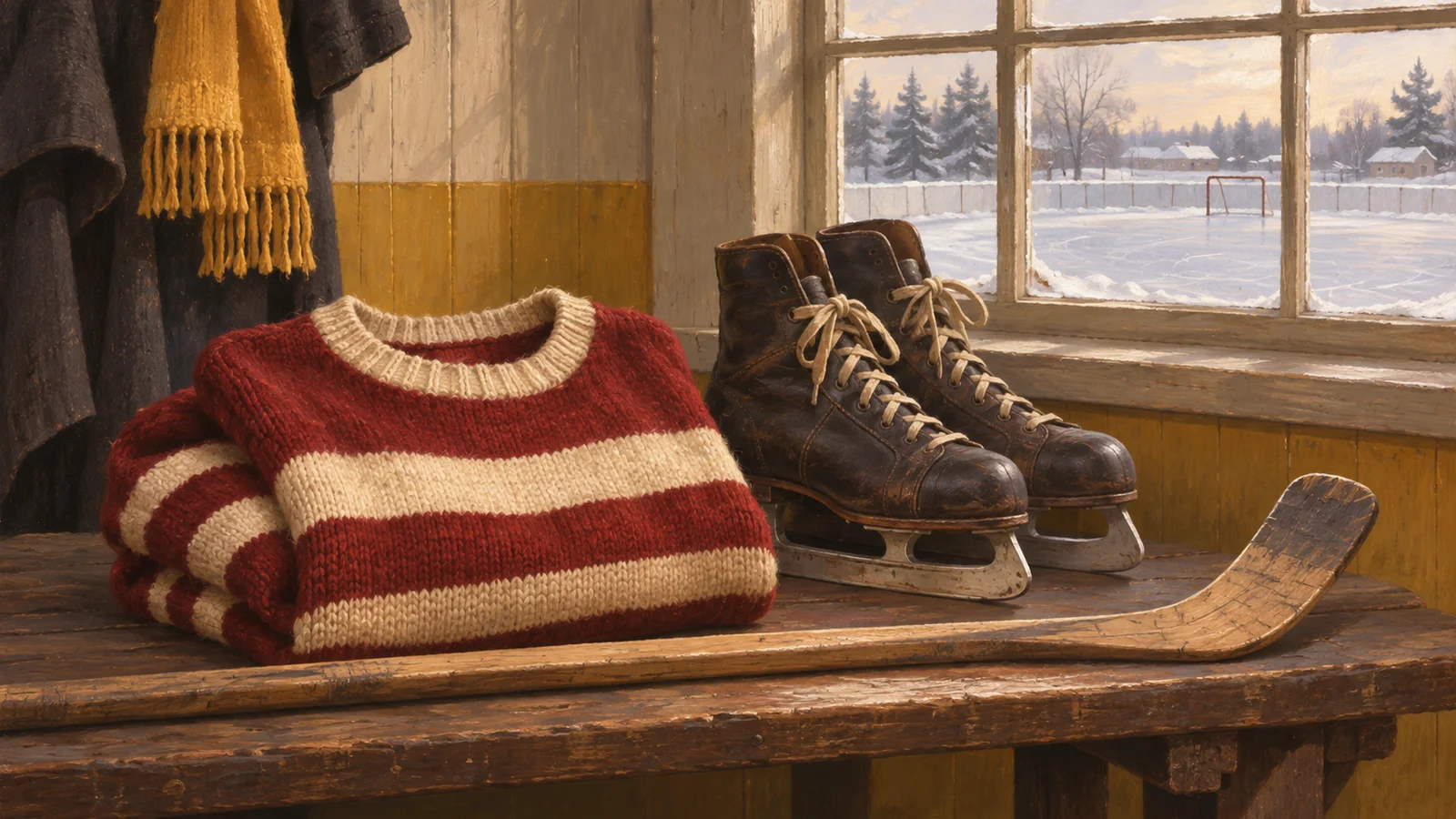
Clothing can be an archive
A hockey sweater can preserve more than a team's colours. The Canadian Museum of History holds one that Hilda Ranscombe wore with the Preston Rivulettes during the 1937–1938 season. Looking at it raises questions a league table cannot answer: who could play, how equipment was paid for and what conditions shaped competition. This object provides an entry point into a history of women's sport with its own protagonists.
A winter to keep playing
Parks Canada dates the team's formation to 1931 in Preston, an Ontario town now part of Cambridge. Several teenagers from a softball team wanted a sport for the winter months. Skating and informal hockey on nearby rivers and ponds were already part of their experience.
Ranscombe became their captain and a prominent right-winger. The institutional history describes large crowds and fast hockey that found an audience despite the social restrictions of the period. That context helps explain a team's significance without reducing its story to a list of victories.
When the sponsor became a problem
The museum's account focuses on the word Springs, added to the sweaters as a reference to the sponsor Preston Springs Hotel in exchange for support to buy equipment. The amateur association's rules prohibited sponsorship and payment. A need for resources therefore collided with a particular idea of how sport should be organised.
For the 1938 national championship, the Rivulettes had to wear other, borrowed sweaters. The preserved garment lets us follow that specific conflict: amateurism also influenced which names could appear on the ice.
Another way to look at hockey
This episode does not describe every team in Canada. It does show why hockey history benefits from attention to objects, places and material circumstances. Behind a uniform are decisions about funding and access to the game.
Next time you see an old hockey sweater, look for its provenance and the explanation provided by the archive that holds it. A date, a player and a detail in the fabric can begin a much wider conversation about who gets to take part in sport.