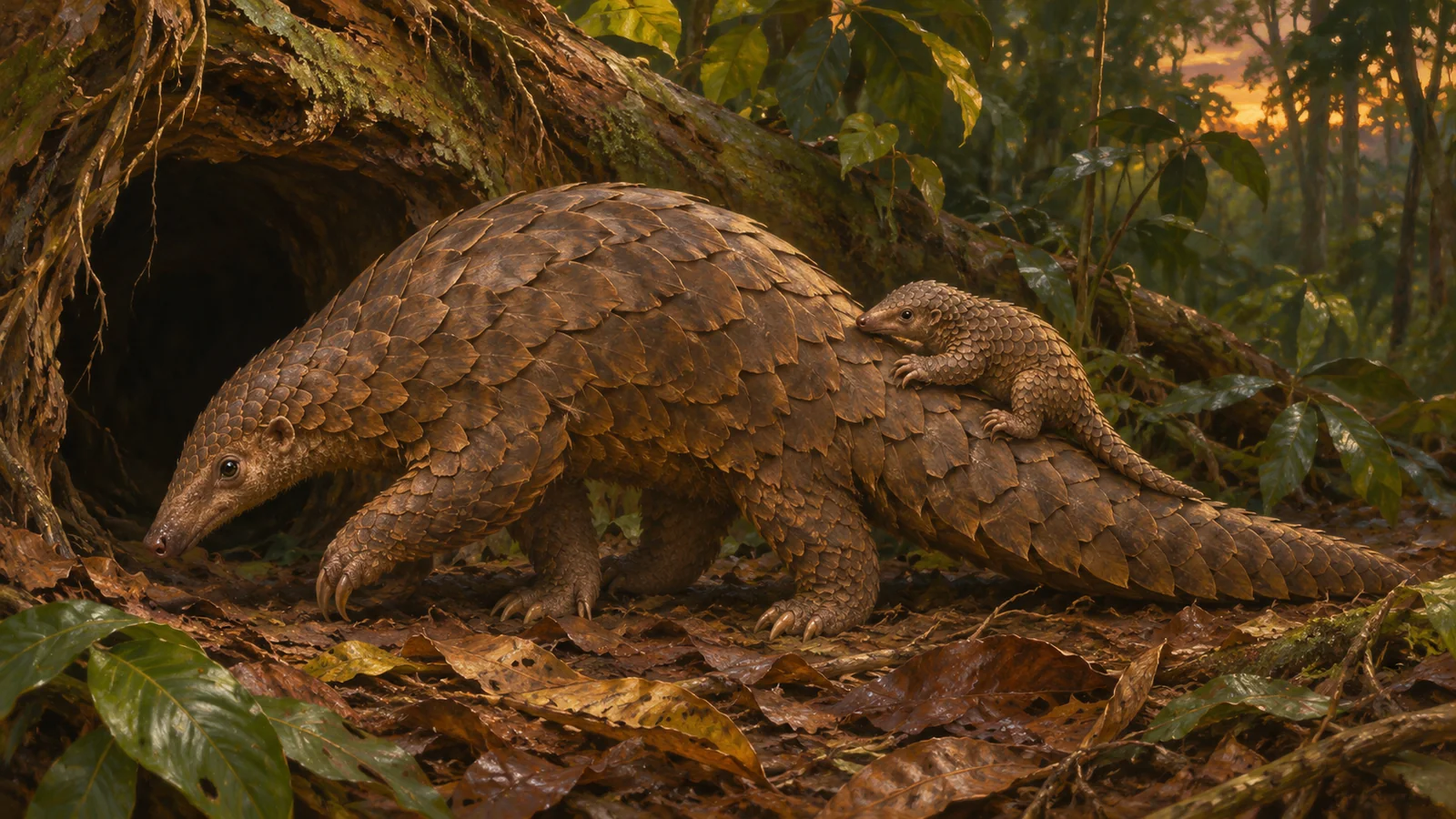
Watching the den entrance
An infrared camera recorded a pangolin pup at a den entrance in October 2005. Norman Lim and Peter Ng were following a wild female Sunda pangolin (Manis javanica) on an island off Singapore’s main island. The country’s Animal and Veterinary Service identifies this as Singapore’s only native pangolin species. The researchers used a radio transmitter to locate the female and placed cameras at the entrances to record when she and her pup came and went. The camera caught the youngster moving by itself at the entrance, while the exact day and place of its birth remained uncertain.
A tunnel, a fallen trunk and a living tree
The female used three shelters during the recorded period. In one, a tunnel ran underground to a hollow inside a dead tree that was still standing. The second hollow was inside a fallen trunk, with an opening at its base. The third was inside a living tree and had two entrances about 1.3 metres above ground. The mother returned to the first two shelters after time away, and the team recorded 24 consecutive days of use at the third. Each tree offered a cavity, with a different route in.
More places to sleep in Borneo
In a 2025 study in Sabah, Malaysian Borneo, González-Abarzúa and colleagues also used radio tracking and camera traps to follow a wild female. They documented ten sleeping sites used by her and her pup during the period of maternal care. Six were tree hollows, two were burrows and two were on tree branches. All ten sites were in forest. The same female later slept in oil palms on two occasions during the period when she was alone. Each study followed a single mother, so the counts describe two mothers and the places available to them. Together, they show why a map of forest cover tells only part of the story. On the ground and up in the trees, the researchers found distinct features that gave the animals somewhere to rest with a pup.